
Here’s a number that surprises most Milwaukee homeowners: the overwhelming majority of houses in this city were built before 1978. On the north side, the south side, the older inner-ring suburbs — most of the housing stock predates the year lead paint was banned for residential use.
That single fact shapes more home sales in Milwaukee than almost anything else, and most sellers don’t find out until a deal is already falling apart.
I’m Carter Crowley. My dad Bryan and I run CB Home Solutions, and we’ve bought dozens of homes across the Milwaukee metro since expanding here — nearly all of them pre-1978, nearly all of them with lead paint somewhere in the building. So when a seller calls me worried that lead paint means they can’t sell, I can tell them honestly: it doesn’t. But it does change who can buy your house and how the sale has to happen. This guide walks through exactly what you need to understand.
Why Lead Paint Is Almost Universal in Milwaukee
Lead-based paint was banned for residential use in the United States in 1978. Before that, it was standard — durable, common, and used in most homes across the country. Milwaukee’s housing stock is old: the classic bungalows, duplexes, and Cape Cods that define neighborhoods from Sherman Park to Bay View to the south side were largely built between the 1900s and the 1960s. That means lead paint is present, in some form, in most homes here.
This isn’t only a Milwaukee problem in the abstract — the city has a well-documented history with childhood lead exposure tied directly to its aging housing, which is why lead is taken seriously here by inspectors, lenders, and the city alike. Lead service lines for water are a separate, related issue the city has been working to replace, but for a home sale, the immediate concern is usually the paint.
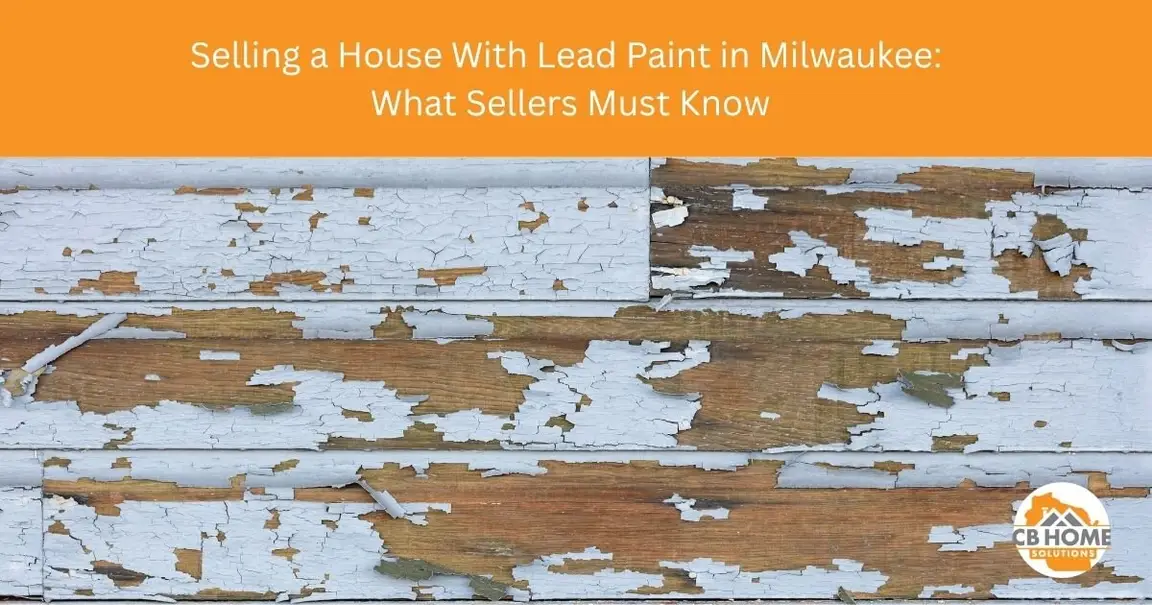
Here’s the part worth understanding clearly: lead-based paint is generally not considered a hazard when it’s intact and in good condition. Deteriorating paint — peeling, chipping, chalking, cracking, or damaged — is what creates a hazard and needs prompt attention. A well-maintained pre-1978 Milwaukee home with solid, painted-over surfaces is in a very different position than one with flaking paint on the porch and window sills.
The Disclosure You’re Legally Required to Make
Whether you sell to a cash buyer or list on the market, federal law requires disclosure on any pre-1978 home. This comes from the Residential Lead-Based Paint Hazard Reduction Act of 1992 — Title X — and the EPA’s Lead-Based Paint Disclosure Rule.
Before a buyer is obligated under a contract, as the seller you must:
- Disclose any known lead-based paint or hazards in the home, including the location and condition of painted surfaces if you know them. You are not required to conduct or pay for any inspection or testing — only to disclose what you actually know.
- Provide any reports you have about lead paint in the property.
- Give the buyer the EPA pamphlet “Protect Your Family From Lead in Your Home.”
- Give buyers a 10-day window (unless waived) to conduct their own lead inspection or risk assessment before they’re obligated to purchase.
A couple of Milwaukee-relevant notes. First, a seller of a pre-1978 home must disclose based on actual knowledge, and is not required to conduct or pay for a lead inspection. Second, the penalties for ignoring this rule are real — sellers, landlords, and agents who don’t provide the proper information can face penalties. This is not a corner to cut.
If you genuinely don’t know whether your home has lead paint, the honest disclosure is exactly that — that you have no knowledge of it. You’re not required to go find out. But you can’t claim there’s none if you’ve never checked.
The Real Problem: Lead Paint and the Financing Wall
Disclosure is the easy part. The harder reality is what lead paint does to your buyer pool — and this is where Milwaukee sales fall apart.
A huge share of buyers in Milwaukee’s $80,000–$200,000 market use FHA loans. FHA is the path most first-time and moderate-income buyers take, and it dominates the financing landscape on the north and central sides especially. And FHA has firm rules about lead paint.
Here’s the one that catches sellers off guard: on a home built before 1978, peeling or chipping paint flagged by the appraiser must be repaired before an FHA loan can close — and this requirement cannot be waived. Lead paint was legal and commonly used before 1978, so the FHA treats deteriorating paint on an older home as a health and safety issue, not a cosmetic one.
What that means in practice: if you’ve got an FHA buyer and your Milwaukee home has flaking paint on the porch, the garage, the window trim, or anywhere the appraiser notices, that paint has to be stabilized before the deal can close. The buyer can waive their 10-day lead inspection window, but they cannot waive the appraiser-required paint repair itself. The repair has to happen — by you, before closing, or through a more complex escrow or 203(k) rehab arrangement.
This is why so many Milwaukee homes with deferred maintenance and an FHA buyer end up stalling at the appraisal stage. Conventional, VA, and USDA loans have their own condition standards too. The cleaner and more intact the paint, the wider your buyer pool. The more deterioration, the more you’re pushed toward either doing the work or selling to a cash buyer.
Abatement vs. Encapsulation vs. Selling As-Is
If you decide to address the lead paint before selling, you’ve got two general approaches — and they cost very different amounts.
Encapsulation (paint stabilization) is the lighter approach: sealing or covering intact lead paint with specialized coatings or covering surfaces so the lead is contained. It’s less expensive but it doesn’t remove the lead, and you still disclose its presence.
Full abatement is the heavy approach: permanently removing or replacing lead-painted components — windows, trim, doors, sometimes siding. It’s far more expensive, often running $10,000–$30,000 or more on a typical Milwaukee home, and it requires EPA-certified contractors working under the lead Renovation, Repair and Painting (RRP) rules. Those RRP rules require real estate professionals and renovation contractors working on pre-1978 properties to be EPA-certified in lead-safe procedures, with real compliance costs attached.
For a lot of Milwaukee sellers — particularly with an inherited home, a former rental, or a property that already needs significant work — spending five figures on lead abatement to qualify for an FHA buyer doesn’t make financial sense. That’s where the third option comes in.
Selling as-is to a cash buyer sidesteps the financing wall entirely. We don’t use an FHA appraisal, so there’s no appraiser-required paint repair, no lender condition, no 203(k) escrow dance. We buy the property knowing it has lead paint, we disclose it like everyone else when we eventually resell, and we handle the lead-safe renovation ourselves as part of bringing the home back to market.
Why Cash Buyers Don’t Flinch at Lead Paint
When I look at a pre-1978 Milwaukee home, lead paint is an expected line item, not a surprise. We renovate these houses anyway — that’s the business — so the cost of doing the work lead-safely is already built into how I evaluate the property and make an offer.
We bought a house on 3613 N 11th St — a north-side rental owned by an out-of-state landlord whose contractors had taken advantage of him and left the house gutted mid-renovation. A property in that condition, in that part of Milwaukee, has no realistic path to a financed buyer: lead paint, an unfinished interior, and a financing system that won’t touch it. The owner needed to cut his losses fast, and a cash sale was the only door that was actually open. We bought it as-is, took on the renovation — including the lead-safe work — and the seller was done with it.
That’s the pattern across most of our Milwaukee purchases. The homes that need a cash buyer are exactly the ones where condition plus lead paint plus financing rules have closed off the traditional market.
What Ben Said
Here’s what Ben Meyer wrote on our Milwaukee Google Business Profile:
“CB Home Solutions was extremely helpful on purchasing my house, all my concerns were taken care of and I would recommend these guys to anyone else.” — Ben Meyer, Milwaukee area homeowner ⭐⭐⭐⭐⭐
Short, but it captures the thing that matters when you’re selling a home with complications you don’t fully understand: concerns handled, no runaround.
The Bottom Line
Lead paint does not prevent you from selling your Milwaukee home. It’s present in most homes here, and it’s manageable. What it does is narrow your options:
- You must disclose what you know — that part is non-negotiable and inexpensive.
- If your paint is intact and the home is otherwise in good shape, you may sell to a financed buyer without much friction.
- If the paint is deteriorating and you’ve got an FHA buyer, you’ll likely have to repair it before closing — a requirement that can’t be waived.
- If the cost of getting the home financing-ready doesn’t pencil out, a cash sale removes the lead-paint-and-financing problem entirely.
The right path depends on your home’s condition and your situation. If you want an honest read on whether your Milwaukee home would sell more easily as-is or with some work first, I’m glad to walk through it with you. You can see how our buying process works, learn more about how we buy homes in any condition as-is, or read about how we buy fixer-upper houses across Wisconsin. When you’re ready to talk specifics, reach out through our Milwaukee page or call (920) 215-4201.
If you’re also weighing whether to make broader repairs before listing, our companion guide on whether to sell as-is or fix your Milwaukee home for an FHA buyer goes deeper on the repair-versus-sell math. And if the lead-paint home you’re dealing with is an inherited property or a former rental, see our guides on selling an inherited Milwaukee house and selling a Milwaukee rental with tenants in place.
FAQ: Selling a Lead Paint Home in Milwaukee
Q: Do I have to test for lead paint before selling my Milwaukee home? No. Federal law requires you to disclose lead paint and hazards you actually know about, and to give buyers the EPA pamphlet and a 10-day window to inspect if they want. You are not required to conduct or pay for a lead inspection yourself. If you don’t know whether the home has lead paint, you disclose that you have no knowledge of it.
Q: Can I sell a Milwaukee home with lead paint as-is? Yes. You can sell as-is to a cash buyer who doesn’t rely on FHA or conventional financing. You still must provide the federal lead disclosure, but there’s no appraiser-required paint repair and no lender condition to satisfy. This is the most common path for Milwaukee homes with deteriorating paint or other deferred maintenance.
Q: Why does lead paint block FHA buyers in Milwaukee? On a home built before 1978, an FHA appraiser who flags peeling or chipping paint will require it to be repaired before the loan can close, and that repair cannot be waived. Since most Milwaukee homes are pre-1978 and many have deferred maintenance, this is a frequent reason FHA deals stall here.
Q: How much does lead paint abatement cost in Milwaukee? Full abatement — removing or replacing lead-painted components like windows and trim using EPA-certified contractors — often runs $10,000 to $30,000 or more depending on the home. Encapsulation (sealing intact paint) is cheaper but doesn’t remove the lead. Many sellers decide the cost isn’t worth it and sell as-is instead.
Q: Does a foreclosure sale require lead paint disclosure? Foreclosure sales are generally exempt from the federal Lead-Based Paint Disclosure Rule. That said, if you’re a homeowner trying to sell before foreclosure — not the lender selling after foreclosure — the disclosure rules still apply to you. If you’re behind on payments, see our guide on selling a Milwaukee home in foreclosure.
Q: I inherited a pre-1978 Milwaukee home. Am I responsible for lead disclosure? If you’re the seller — including as the personal representative of an estate — you provide the federal lead disclosure based on what you know about the property. In many inherited-home situations the heirs have limited knowledge of the home’s history, in which case you disclose that you have no records or knowledge of lead paint. See our inherited-home guide for the full estate-sale process.